

A Beginner’s Guide to NVIDIA Spectrum and Spectrum-X Networking Spectrum vs ordinary switching, fabric thinking, history, and AI motivation Network Operating Systems Cumulus Linux Cumulus Linux is the strategic Linux NOS for NVIDIA Spectrum switching. Current Cumulus 5.x releases are based on Debian and use NVUE for a structured operational interface while retaining normal Linux…
A Beginner’s Guide to NVIDIA Spectrum and Spectrum-X Networking Spectrum vs ordinary switching, fabric thinking, history, and AI motivation RDMA and RoCE for Beginners Why RDMA exists Traditional socket networking passes data through multiple software layers and usually involves CPU participation and memory copies. Remote Direct Memory Access (RDMA) lets one system transfer data directly…
A Beginner’s Guide to NVIDIA Spectrum and Spectrum-X Networking Spectrum vs ordinary switching, fabric thinking, history, and AI motivation Large-Scale Fabric Architecture Small leaf-spine Figure 7. Small two-tier leaf-spine fabric Figure 8. Pods connected through an additional tier or DCI layer Pods are useful fault and scaling domains. However, adding a network tier also adds…
A Beginner’s Guide to NVIDIA Spectrum and Spectrum-X Networking Spectrum vs ordinary switching, fabric thinking, history, and AI motivation Why NVIDIA Spectrum? Architectural benefits What Spectrum does not eliminate High-performance silicon does not remove the need for good architecture. Oversubscription, optics, routing policy, queue design, host PCIe topology, NIC firmware, GPU placement, and application traffic…
A Beginner’s Guide to NVIDIA Spectrum and Spectrum-X Networking Spectrum vs ordinary switching, fabric thinking, history, and AI motivation The one-sentence version Spectrum is the Ethernet switching foundation; Spectrum-X is an end-to-end AI Ethernet system assembled from switches, host adapters, software, and validated tuning. The distinction matters because buying a fast switch alone does not…
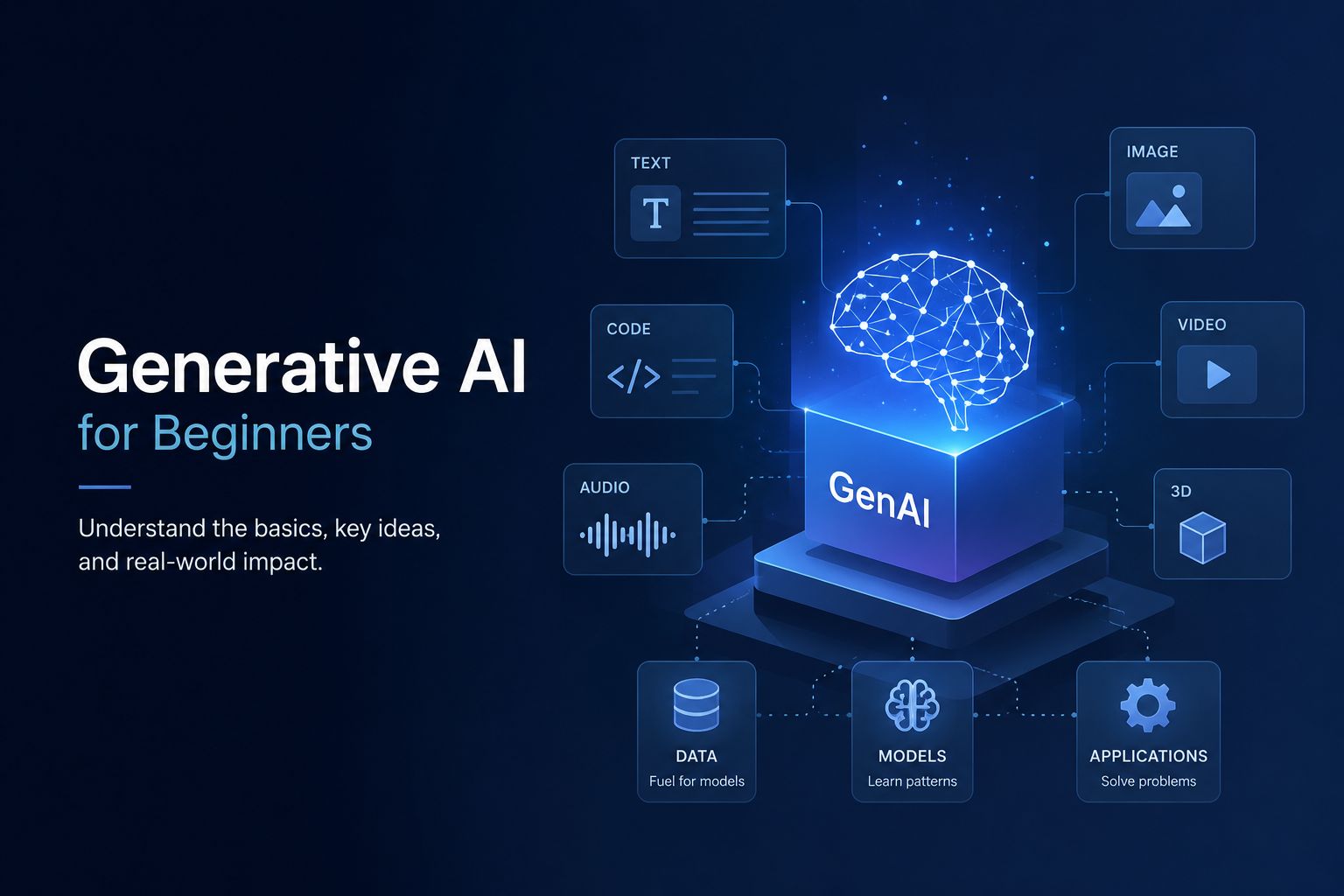
A Beginner’s Guide to the Fundamentals A practical, concept-first guide for technology professionals and curious beginners How Large Language Models Work An LLM can be understood at a useful level without deriving the mathematics. The important idea is that text becomes numerical representations, passes through many transformer layers, and is used to predict what should…
A Beginner’s Guide to the Fundamentals A practical, concept-first guide for technology professionals and curious beginners The one-sentence version Think of Generative AI as a new software capability built around models that can generate useful content from context. The model is important, but a production GenAI system is usually much larger than the model: it…
A Beginner’s Guide to the Fundamentals Basic concepts, components, modules, use cases, and the mental model behind declarative Linux The rebuild lifecycle: build, test, switch, boot The command nixos-rebuild is the normal bridge between configuration code and an activated NixOS system. Different subcommands let you control how much of the change becomes active. Command Beginner…
A Beginner’s Guide to the Fundamentals Basic concepts, components, modules, use cases, and the mental model behind declarative Linux The Nix language: just enough to read configuration The Nix language is declarative, functional, lazy, and dynamically typed. You do not need to become a functional-programming expert to use NixOS. Start by learning a small set…
A Beginner’s Guide to the Fundamentals Basic concepts, components, modules, use cases, and the mental model behind declarative Linux The one-sentence version NixOS is a Linux distribution where the intended state of the operating system is described as code, built from precisely identified inputs, and activated as a versioned system generation that can be reproduced,…